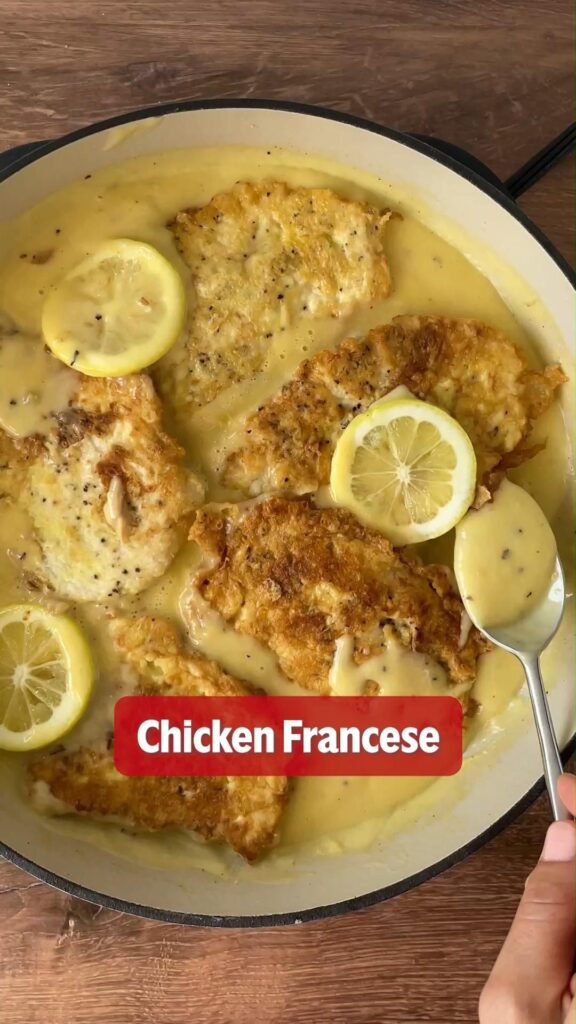
Chicken Francese is the Italian-American restaurant classic you order when you want something that tastes expensive but comes together in one skillet. Thin chicken cutlets get dredged in flour, dipped in egg, and pan-fried until lacy and golden, then a bright lemon-butter white wine sauce is finished with a splash of cream to make it silky instead of sharp.
Advertisements1
The creamy twist is what makes this version a weeknight favorite. Traditional Francese sauce is lean and glossy, but a small amount of heavy cream rounds out the lemon and wine so the sauce actually clings to the chicken instead of sliding off. You still get that signature tang, just with a richer, more forgiving texture.
Everything happens in one large skillet, which means the floury egg coating that sticks to the pan becomes the body of your sauce. Serve it over angel hair, mashed potatoes, or crusty bread, and dinner is on the table in about 45 minutes with mostly pantry ingredients.
Why You'll Love This Recipe
About the Ingredients
6 thin-sliced boneless skinless chicken breasts (about 1.5 lb / 680g total), pounded to 1/4 inch
Ask the butcher to run them through the slicer, or buy regular breasts and pound them between plastic wrap. Substitution: boneless skinless thighs work and stay juicier, but pound them to an even 1/4 inch too.
1/2 cup (60g) all-purpose flour
This is the glue that helps the egg coating cling and thickens the pan sauce later. Substitution: for a gluten-free version use 1/2 cup fine white rice flour or a 1:1 GF blend, and whisk 1 teaspoon cornstarch into the sauce at the end.
2 large eggs
Beaten with a fork until completely uniform so the coating fries evenly. Buying tip: look for eggs with a deep orange yolk, which gives the cutlets a richer golden color.
1/2 cup (50g) finely grated Parmesan or Pecorino Romano
Whisked into the egg for a savory, crisp-edged crust. Buying tip: grate it yourself from a block; pre-shredded cheese is coated in starch and clumps in the egg.
1 teaspoon kosher salt, plus more for the sauce
Kosher salt seasons the egg mixture and the sauce in stages. Substitution: use 1/2 teaspoon fine sea salt if you only have table salt, since it is much saltier by volume.
1/2 teaspoon freshly ground black pepper
Fresh-cracked pepper blooms in the hot butter and gives the coating a little bite. Substitution: white pepper if you want a smoother look with no dark flecks.
4 tablespoons (56g) unsalted butter, divided
Two tablespoons for frying, two for the sauce, so the butter does not burn. Substitution: use 2 tablespoons olive oil plus 2 tablespoons butter for frying if you want a higher smoke point.
2 tablespoons olive oil
Blended with butter to raise the smoke point and help the cutlets brown evenly. Buying tip: regular (not extra-virgin) olive oil is fine here and cheaper for high-heat frying.
3 cloves garlic, thinly sliced
Sliced, not minced, so it sweetens in the pan without scorching. Substitution: 1/2 teaspoon garlic powder stirred into the sauce if you are out of fresh.
1 cup (240ml) dry white wine, such as Pinot Grigio or Sauvignon Blanc
The wine is the backbone of the sauce, so use something you would actually drink. Substitution: 1 cup low-sodium chicken broth plus 1 extra tablespoon lemon juice if you avoid alcohol.
1 cup (240ml) low-sodium chicken broth
Cuts the wine so the sauce is balanced rather than boozy. Buying tip: choose a broth under 500mg sodium per cup so you control the seasoning.
1/2 cup (120ml) heavy cream
The creamy twist; it emulsifies the butter and lemon into a velvety sauce. Substitution: half-and-half works but simmer 2 minutes longer to thicken; full-fat coconut cream is a dairy-free option.
3 tablespoons fresh lemon juice (about 1 large lemon) plus 1 lemon, thinly sliced
Juice goes into the sauce, slices get simmered on top for a pretty, aromatic finish. Buying tip: pick lemons that feel heavy for their size, which means more juice.
2 tablespoons chopped fresh parsley
A fresh, grassy finish that cuts the richness. Substitution: 1 teaspoon chopped fresh thyme or 1 tablespoon torn basil.
Tips & Tricks
Do not crowd the pan
Fry the cutlets in two batches in a 12-inch skillet. Overlapping pieces steam instead of fry, and the coating turns pale and soggy rather than golden and crisp.
Scrape the fond
After frying, the browned bits stuck to the skillet are pure flavor. Pour in the wine and broth while the pan is still hot and scrape the bottom with a wooden spoon so the sauce picks up all of it.
Add cream off a low simmer
Whisk the cream in only after the sauce has reduced and the heat is low. Boiling cream hard can make it look grainy, so keep it at a gentle bubble and stir constantly.
Season the sauce at the end
The broth, wine, and Parmesan all carry salt, so taste before adding more. A final squeeze of lemon is often what the sauce needs instead of extra salt.
Pro Tips
Step-by-Step Instructions
1. Pound and Dry the Chicken
Pat the 6 thin cutlets completely dry, then pound any thick spots to an even 1/4 inch between two sheets of plastic wrap. Even thickness is what guarantees they cook through before the crust burns.
2. Set Up the Dredge
Whisk 1/2 cup flour with 1/2 teaspoon salt and 1/4 teaspoon pepper on a plate. In a shallow bowl, beat the 2 eggs with the Parmesan and remaining salt and pepper until no streaks of white remain.
3. Coat the Cutlets
Dredge each cutlet in flour and shake off the excess, then dip it into the egg mixture so both sides are fully coated. Let the coated cutlets rest on a rack for 5 minutes so the coating sets and does not fall off in the pan.
4. Fry Until Golden
Heat 2 tablespoons butter and the olive oil in a 12-inch skillet over medium-high heat, about 375F (190C), until the butter foams. Fry the cutlets in two batches for 3 to 4 minutes per side, until deep golden brown and the internal temperature reads 165F (74C); set aside on a rack.
5. Build the Sauce Base
Pour off all but 1 tablespoon of fat, lower the heat to medium, and add the sliced garlic. Cook for 30 seconds until fragrant, then pour in the wine and broth, scraping up the browned bits, and simmer for 5 to 6 minutes until reduced by about half.
6. Make It Creamy
Reduce the heat to low, whisk in the heavy cream and lemon juice, and simmer gently for 3 to 4 minutes until the sauce coats the back of a spoon. Taste and adjust salt and pepper.
7. Finish the Sauce
Turn off the heat and swirl in the remaining 2 tablespoons butter until glossy, then return the chicken and any juices to the pan. Add the lemon slices and spoon sauce over the top.
8. Garnish and Serve
Scatter the chopped parsley over the skillet and serve immediately over angel hair pasta, mashed potatoes, or rice, spooning plenty of the creamy sauce over each portion.
Delicious Variations
Chicken Francese Piccata
Add 2 tablespoons capers and 1 extra tablespoon lemon juice to the sauce for a brinier, sharper spin on the same creamy base.
Mushroom Cream Francese
Saute 8 ounces sliced cremini mushrooms with the garlic until browned, then proceed with the wine and cream for an earthy, heartier version.
Shrimp Francese
Swap the chicken for 1.5 lb large peeled shrimp, frying them just 90 seconds per side, then finish in the same creamy lemon sauce for a fast seafood dinner.
How to Store Creamy Chicken Francese
Refrigerator
Store leftovers in an airtight container in the refrigerator for up to 3 days. Keep the chicken in the sauce so it stays moist, and reheat gently to avoid toughening the coating.
Freezer
Freezing is not recommended because the egg coating turns spongy and the cream sauce can separate. If you must, freeze the chicken and sauce separately for up to 1 month and thaw overnight in the refrigerator.
Reheating
Reheat in a covered skillet over low heat with a splash of broth or water for 6 to 8 minutes, until the sauce loosens and the chicken reaches 165F (74C). Avoid the microwave, which makes the coating rubbery.
Frequently Asked Questions
Q: What is the difference between Chicken Francese and Chicken Piccata?
Chicken Francese is dredged in flour and egg and served in a lemon-butter white wine sauce, while Chicken Piccata skips the egg, is often breaded, and always includes capers. Francese has a softer, eggy coating and a smoother sauce, whereas piccata is brighter and brinier.
Q: Can I make Chicken Francese without wine?
Yes, simply replace the 1 cup of white wine with 1 cup of low-sodium chicken broth plus 1 extra tablespoon of lemon juice. The sauce will be slightly less complex but still bright and creamy, so taste and adjust the lemon at the end.
Q: Why did my Chicken Francese coating fall off?
The coating usually falls off because the chicken was wet or the pan was not hot enough when the cutlets went in. Pat the chicken bone dry, let the coated cutlets rest 5 minutes, and make sure the butter is foaming at around 375F (190C) before frying.
Q: Can I use chicken thighs instead of breasts for Chicken Francese?
Yes, boneless skinless thighs work beautifully and stay juicier, but you must pound them to an even 1/4 inch so they cook through. Fry them about 1 minute longer per side than breasts and check for 165F (74C).
Q: What do you serve with Chicken Francese?
Angel hair pasta, linguine, or mashed potatoes are the classic choices because they soak up the creamy lemon sauce. Crusty bread, steamed asparagus, or a simple green salad round out the plate nicely.
If you make this Creamy Chicken Francese, snap a photo and let me know how the sauce turned out in the comments. It is one of those dinners that looks like a restaurant plate but comes together in one skillet on a Tuesday, so save the recipe and share it with someone who needs an easy win this week.
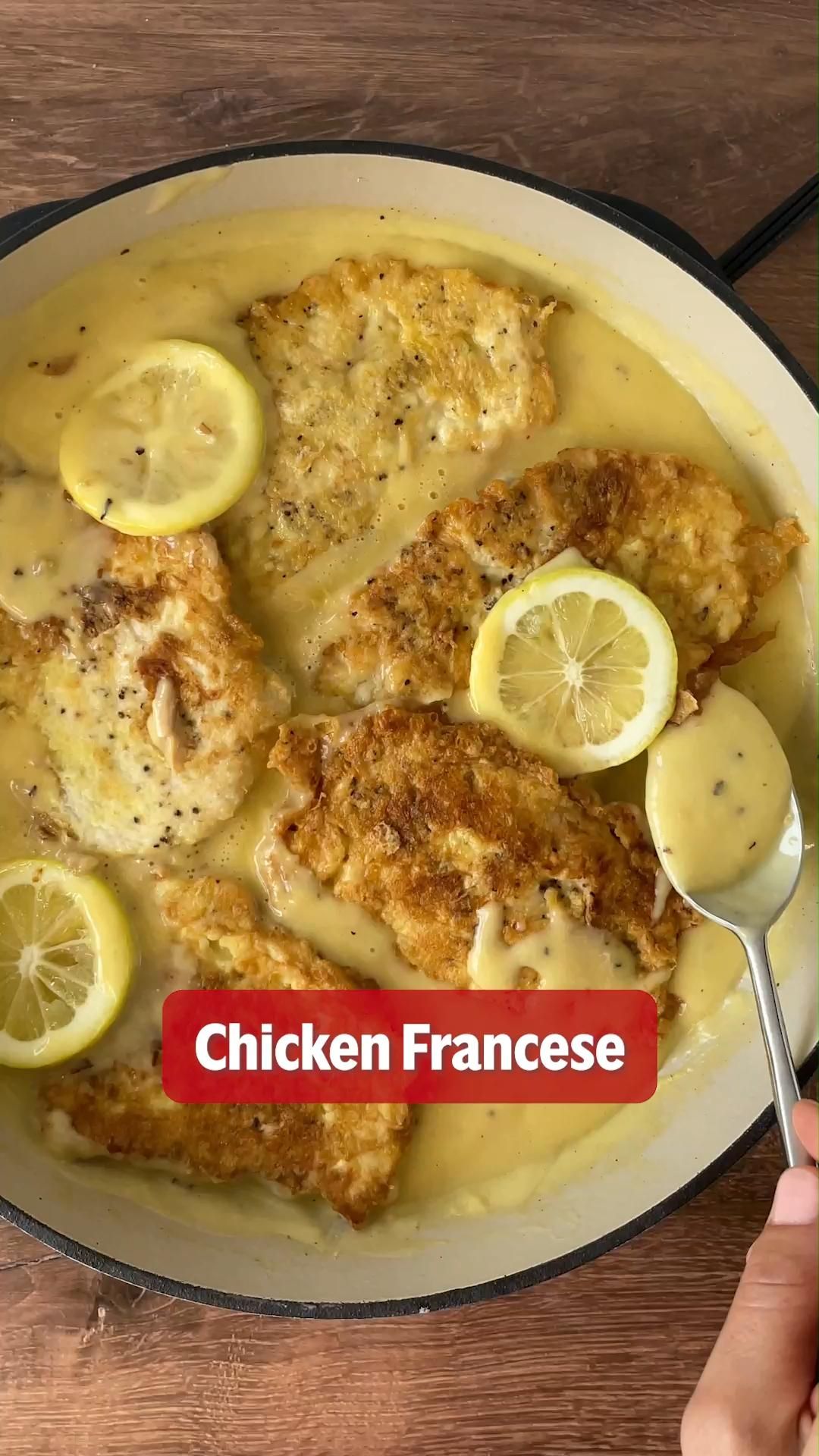
Creamy Chicken Francese
Creamy Chicken Francese turns thin golden cutlets into a silky lemon-butter wine sauce for an easy 45-minute dinner the whole family loves.
🧂 Ingredients
- 6 thin-sliced boneless skinless chicken breasts (about 1.5 lb / 680g total), pounded to 1/4 inch
- 1/2 cup (60g) all-purpose flour
- 2 large eggs
- 1/2 cup (50g) finely grated Parmesan or Pecorino Romano
- 1 teaspoon kosher salt, plus more for the sauce
- 1/2 teaspoon freshly ground black pepper
- 4 tablespoons (56g) unsalted butter, divided
- 2 tablespoons olive oil
- 3 cloves garlic, thinly sliced
- 1 cup (240ml) dry white wine, such as Pinot Grigio or Sauvignon Blanc
- 1 cup (240ml) low-sodium chicken broth
- 1/2 cup (120ml) heavy cream
- 3 tablespoons fresh lemon juice (about 1 large lemon) plus 1 lemon, thinly sliced
- 2 tablespoons chopped fresh parsley
📋 Instructions
- 1Pound and Dry the Chicken — Pat the 6 thin cutlets completely dry, then pound any thick spots to an even 1/4 inch between two sheets of plastic wrap. Even thickness is what guarantees they cook through before the crust burns.
- 2Set Up the Dredge — Whisk 1/2 cup flour with 1/2 teaspoon salt and 1/4 teaspoon pepper on a plate. In a shallow bowl, beat the 2 eggs with the Parmesan and remaining salt and pepper until no streaks of white remain.
- 3Coat the Cutlets — Dredge each cutlet in flour and shake off the excess, then dip it into the egg mixture so both sides are fully coated. Let the coated cutlets rest on a rack for 5 minutes so the coating sets and does not fall off in the pan.
- 4Fry Until Golden — Heat 2 tablespoons butter and the olive oil in a 12-inch skillet over medium-high heat, about 375F (190C), until the butter foams. Fry the cutlets in two batches for 3 to 4 minutes per side, until deep golden brown and the internal temperature reads 165F (74C); set aside on a rack.
- 5Build the Sauce Base — Pour off all but 1 tablespoon of fat, lower the heat to medium, and add the sliced garlic. Cook for 30 seconds until fragrant, then pour in the wine and broth, scraping up the browned bits, and simmer for 5 to 6 minutes until reduced by about half.
- 6Make It Creamy — Reduce the heat to low, whisk in the heavy cream and lemon juice, and simmer gently for 3 to 4 minutes until the sauce coats the back of a spoon. Taste and adjust salt and pepper.
- 7Finish the Sauce — Turn off the heat and swirl in the remaining 2 tablespoons butter until glossy, then return the chicken and any juices to the pan. Add the lemon slices and spoon sauce over the top.
- 8Garnish and Serve — Scatter the chopped parsley over the skillet and serve immediately over angel hair pasta, mashed potatoes, or rice, spooning plenty of the creamy sauce over each portion.