

Japchae is a classic Korean celebration dish featuring sweet potato glass noodles stir-fried with an array of colorful vegetables and tender beef, all coated in a glossy, savory-sweet sauce. This version is streamlined for weeknight ease without sacrificing authentic flavor.
Advertisements1
The key to great japchae lies in the noodles: they should be perfectly chewy, not sticky, and each strand coated in the umami-rich sauce. By prepping all ingredients before you start cooking, the stir-fry comes together in minutes.
Serve this as a main dish or as a side alongside other Korean favorites like bulgogi or kimchi. It's equally delicious warm or at room temperature, making it ideal for meal prep and gatherings.
Why You'll Love This Recipe
About the Ingredients
8 oz (225g) sweet potato glass noodles (dangmyeon)
These are the classic noodles for japchae, made from sweet potato starch. They become translucent and chewy. Substitute with Korean vermicelli or even rice noodles if needed, but texture will differ.
1/2 lb (225g) beef sirloin, thinly sliced
Use a tender cut like ribeye or sirloin. For a vegetarian version, substitute with firm tofu or extra mushrooms.
1 large carrot, julienned
Adds sweetness and crunch. You can use a mandoline for uniform strips.
1 medium onion, thinly sliced
Provides a savory base. Use a sweet onion like Vidalia for a milder flavor.
3-4 cloves garlic, minced
Fresh garlic is essential for flavor. Pre-minced garlic can be used in a pinch.
1/2 cup (about 3 oz) shiitake mushrooms, sliced
Dried shiitakes rehydrated in warm water work great. If using fresh, remove stems.
1 bunch (about 6 oz) fresh spinach
Baby spinach is fine, but regular spinach is traditional. You can also use Korean spinach.
2 green onions, cut into 2-inch pieces
Adds a fresh oniony bite. Use the white and light green parts.
3 tbsp soy sauce
Use low-sodium to control salt. Korean soup soy sauce is lighter but regular works.
2 tbsp sugar
Brown sugar or honey can be substituted for a deeper flavor.
2 tbsp sesame oil
Toasted sesame oil is crucial for the nutty aroma. Don't skip it.
1 tbsp sesame seeds, toasted
For garnish. Toast in a dry pan until golden for extra flavor.
Tips & Tricks
- Cook the noodles just until al dente, then rinse with cold water to stop cooking and prevent sticking.
- Don't overcook the vegetables; they should remain crisp-tender for the best texture.
- Taste and adjust seasoning before serving; the sauce should be balanced between sweet and salty.
Pro Tips
Step-by-Step Instructions
1. Prepare the Noodles
Bring a large pot of water to a boil. Add the glass noodles and cook according to package directions, usually 6-7 minutes, until translucent and chewy. Drain and rinse under cold water. Toss with 1 tsp sesame oil to prevent sticking. Set aside.
2. Marinate the Beef
In a bowl, combine the beef slices with 1 tbsp soy sauce, 1 tsp sugar, 1 tsp sesame oil, and a pinch of black pepper. Mix well and let marinate for 10-15 minutes while you prep the vegetables.
3. Blanch the Spinach
Bring a small pot of water to a boil. Add the spinach and blanch for 30 seconds until wilted. Drain, rinse with cold water, and squeeze out excess water. Season with a pinch of salt and a few drops of sesame oil. Set aside.
4. Stir-Fry the Vegetables
Heat a large skillet or wok over medium-high heat (375°F/190°C). Add a drizzle of oil. Stir-fry the carrots for 2-3 minutes until slightly softened but still crisp. Remove and set aside. Repeat with onions (2 minutes), mushrooms (3-4 minutes until browned), and green onions (1 minute). Season each lightly with salt.
5. Cook the Beef
In the same hot skillet, add a little more oil if needed. Add the marinated beef in a single layer. Cook undisturbed for 2-3 minutes until browned on one side, then flip and cook another 1-2 minutes until cooked through. The beef should be golden brown and slightly caramelized.
6. Combine Everything
Return all cooked vegetables and spinach to the skillet with the beef. Add the noodles. In a small bowl, mix together the remaining 2 tbsp soy sauce, 1 tbsp sugar, and 1 tbsp sesame oil. Pour over the noodle mixture.
7. Toss and Serve
Increase heat to high (400°F/200°C) and toss everything together for 2-3 minutes until well combined and heated through. The noodles should be glossy and coated. Taste and adjust seasoning with more soy or sugar if needed. Garnish with sesame seeds and serve immediately.
Delicious Variations
Vegetarian Japchae
Omit the beef and double the mushrooms or add extra vegetables like bell peppers and zucchini.
Spicy Japchae
Add 1-2 tsp gochujang (Korean chili paste) to the sauce for a kick.
Seafood Japchae
Replace beef with shrimp or squid, cooking them just until opaque.
How to Store Korean Japchae
Refrigerator
Store in an airtight container for up to 3 days.
Freezer
Freeze in a sealed container for up to 1 month. Thaw overnight in the fridge before reheating.
Reheating
Reheat in a skillet over medium heat with a splash of water or sesame oil until warmed through. You can also microwave in 30-second intervals, stirring between.
Frequently Asked Questions
Q: What are glass noodles made of?
Glass noodles, also known as dangmyeon, are made from sweet potato starch, which gives them their chewy, translucent texture. They are gluten-free.
Q: Can I make japchae ahead of time?
Yes, japchae is great for meal prep. It tastes delicious at room temperature or reheated. Store it in the fridge and enjoy within 3 days.
Q: Is japchae served hot or cold?
Japchae is traditionally served warm or at room temperature. It's often served as a side dish at Korean celebrations and can be enjoyed either way.
Q: What can I substitute for sweet potato noodles?
If you can't find dangmyeon, you can use Korean vermicelli or even rice noodles, but note that the texture will be different. The dish will still be tasty.
If you loved this Korean Japchae recipe, please leave a rating and comment below! Don't forget to share your creations on social media and tag us. Happy cooking!
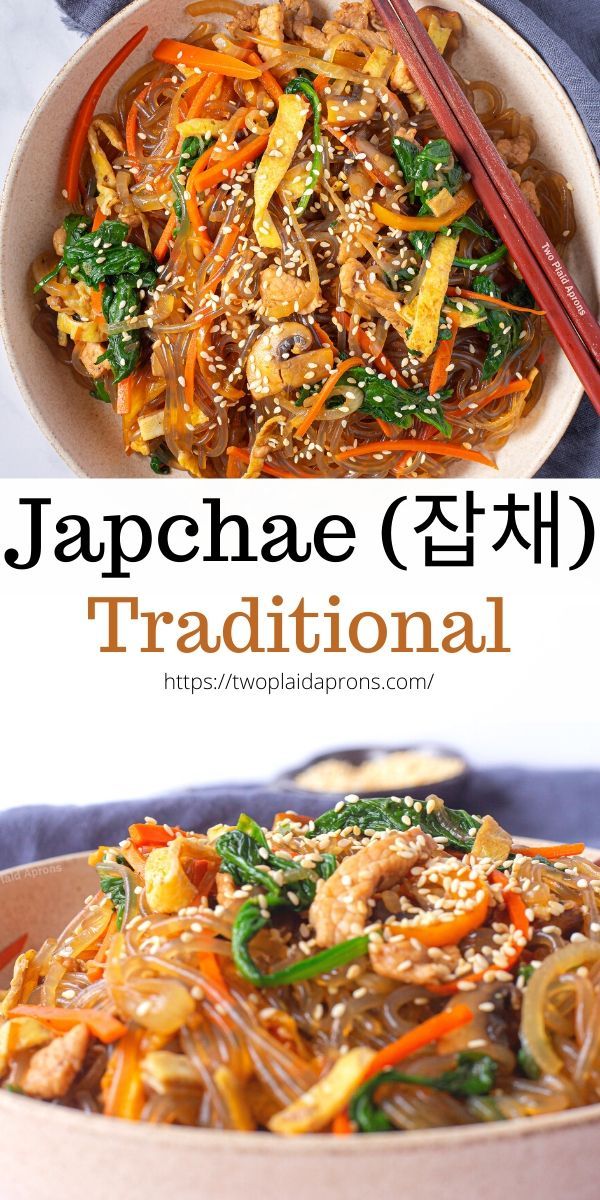
Korean Japchae
Korean Japchae: savory-sweet glass noodles with veggies and beef, ready in 30 minutes for a vibrant, satisfying meal.
🧂 Ingredients
- 8 oz (225g) sweet potato glass noodles (dangmyeon)
- 1/2 lb (225g) beef sirloin, thinly sliced
- 1 large carrot, julienned
- 1 medium onion, thinly sliced
- 3-4 cloves garlic, minced
- 1/2 cup (about 3 oz) shiitake mushrooms, sliced
- 1 bunch (about 6 oz) fresh spinach
- 2 green onions, cut into 2-inch pieces
- 3 tbsp soy sauce
- 2 tbsp sugar
- 2 tbsp sesame oil
- 1 tbsp sesame seeds, toasted
📋 Instructions
- 1Prepare the Noodles — Bring a large pot of water to a boil. Add the glass noodles and cook according to package directions, usually 6-7 minutes, until translucent and chewy. Drain and rinse under cold water. Toss with 1 tsp sesame oil to prevent sticking. Set aside.
- 2Marinate the Beef — In a bowl, combine the beef slices with 1 tbsp soy sauce, 1 tsp sugar, 1 tsp sesame oil, and a pinch of black pepper. Mix well and let marinate for 10-15 minutes while you prep the vegetables.
- 3Blanch the Spinach — Bring a small pot of water to a boil. Add the spinach and blanch for 30 seconds until wilted. Drain, rinse with cold water, and squeeze out excess water. Season with a pinch of salt and a few drops of sesame oil. Set aside.
- 4Stir-Fry the Vegetables — Heat a large skillet or wok over medium-high heat (375°F/190°C). Add a drizzle of oil. Stir-fry the carrots for 2-3 minutes until slightly softened but still crisp. Remove and set aside. Repeat with onions (2 minutes), mushrooms (3-4 minutes until browned), and green onions (1 minute). Season each lightly with salt.
- 5Cook the Beef — In the same hot skillet, add a little more oil if needed. Add the marinated beef in a single layer. Cook undisturbed for 2-3 minutes until browned on one side, then flip and cook another 1-2 minutes until cooked through. The beef should be golden brown and slightly caramelized.
- 6Combine Everything — Return all cooked vegetables and spinach to the skillet with the beef. Add the noodles. In a small bowl, mix together the remaining 2 tbsp soy sauce, 1 tbsp sugar, and 1 tbsp sesame oil. Pour over the noodle mixture.
- 7Toss and Serve — Increase heat to high (400°F/200°C) and toss everything together for 2-3 minutes until well combined and heated through. The noodles should be glossy and coated. Taste and adjust seasoning with more soy or sugar if needed. Garnish with sesame seeds and serve immediately.