

Japanese curry with pork is the cozy weeknight dinner I make more than any other curry. Unlike Indian or Thai curries, Japanese curry is thick, glossy, gently sweet, and only mildly spicy, which is exactly why kids and spice-shy adults both clean their bowls.
Advertisements1
The magic comes from caramelized onions, a hit of grated apple, and a roux that thickens the sauce into something that clings to every grain of rice. Pork shoulder braises in the same pot, so the meat goes fork-tender while the carrots and potatoes soak up all that savory-sweet flavor.
You do not need a Japanese market run for this. A block of store-bought curry roux plus a few pantry tweaks gives you a sauce that tastes like it simmered all day, even though it is on the table in under an hour.
Why You'll Love This Recipe
About the Ingredients
2 lb (900g) boneless pork shoulder, cut into 1-inch cubes
Pork shoulder stays juicy through a 25-minute simmer; pork loin works but will be slightly drier, so reduce the simmer to 18 minutes. Ask your butcher to cube it if you want to skip the knife work.
2 large yellow onions (about 1 lb / 450g), thinly sliced
Yellow onions give the sweet backbone of the sauce; sweet Vidalia onions work too but skip the added honey if you use them. Do not rush the 10-minute sauté, since the browning is where the flavor starts.
3 medium carrots (about 10 oz / 280g), cut into 1-inch chunks
Cut carrots and potatoes the same size so they finish together; if you only have baby carrots, halve them lengthwise. Russet potatoes break down and thicken the sauce, while Yukon Golds hold their shape.
2 medium Yukon Gold potatoes (about 1 lb / 450g), peeled and cut into 1-inch chunks
Yukon Golds stay creamy without turning to mush; red potatoes are a fine swap. Soak the cut potatoes in cold water if you are prepping ahead so they do not brown.
3 tbsp unsalted butter
Butter gives the roux a rounded, rich base; use a neutral oil like canola for a dairy-free version and add 1 extra tablespoon of flour.
3 tbsp all-purpose flour
Flour is the thickener if you are making roux from scratch; if you use a store-bought curry block instead, skip the butter and flour entirely and add the block at the end.
2 tbsp Japanese curry powder (or 1 block Japanese curry roux, about 3.5 oz / 100g)
S&B curry powder or a boxed roux block both work; the block is sweeter and thicker, so taste before adding extra honey. Garam masala plus a pinch of cinnamon is a decent emergency substitute.
3 cups (720ml) low-sodium chicken broth
Broth keeps the sauce savory rather than watery; vegetable broth makes it vegetarian-friendly if you also swap the pork for firm tofu. Water plus 1 teaspoon of Better Than Bouillon is an easy backup.
1 tbsp honey plus 1 tbsp ketchup
Honey and ketchup are the classic Japanese curry secret for sweetness and tang; maple syrup and tomato paste (1 teaspoon) are good swaps. Add them after the roux so you can taste and adjust.
1 tbsp soy sauce plus 1 tsp Worcestershire sauce
Soy sauce brings salt and umami while Worcestershire adds depth; tamari is a gluten-free substitute and coconut aminos works in a pinch. Taste at the end before adding more salt.
1 small Fuji apple, peeled and grated (about 1/2 cup)
Grated apple melts into the sauce and adds natural sweetness; a ripe pear or 2 tablespoons of applesauce substitutes well. Grate it on the large holes so it disappears into the gravy.
Steamed short-grain rice, for serving
Short-grain or sushi rice gives the sticky texture that soaks up curry best; jasmine rice works but will not cling the same way. Start the rice before you begin the curry so everything finishes together.
Tips & Tricks
Do not skip browning the pork
Searing the cubes in a hot pan for 2-3 minutes per side builds a fond on the bottom of the pot that dissolves into the sauce and gives it a deep, roasted flavor you cannot get from raw meat.
Add the roux off the heat
Whisk the flour and butter (or curry block) into the liquid only after the pot is off the boil, otherwise the roux clumps into lumps that never smooth out.
Balance at the very end
Taste after 20 minutes and adjust with a splash of soy sauce for salt, honey for sweet, or a teaspoon of rice vinegar if it tastes flat.
- Simmer, never boil, after the roux goes in: A hard boil can make the sauce gluey and scorch the bottom; keep it at a lazy bubble at 195°F (90°C) and stir every few minutes.
Pro Tips
Step-by-Step Instructions
1. Sear the pork
Heat 1 tablespoon of oil in a large Dutch oven over medium-high heat (375°F / 190°C). Pat the pork cubes dry, season with salt and pepper, and sear in a single layer for 2-3 minutes per side until deeply golden brown on the outside; the pork will not be cooked through yet, which is fine. Work in two batches so the meat browns instead of steaming, then set the pork aside on a plate.
2. Soften the onions
Lower the heat to medium (325°F / 165°C) and add the sliced onions to the same pot with a pinch of salt. Cook for 10-12 minutes, stirring often, until the onions are soft, translucent, and just starting to turn golden at the edges. This slow sweat is what gives Japanese curry its signature sweetness.
3. Build the roux
Push the onions to one side, add the butter, and let it melt, then whisk in the flour and curry powder. Cook the paste for 60 seconds, stirring constantly, until it smells toasted and nutty and turns a shade darker, about the color of peanut butter. If you are using a curry roux block instead, skip this step and add the block later.
4. Add liquid and pork
Pour in the chicken broth in a steady stream, whisking to loosen the roux from the bottom of the pot. Return the seared pork and any juices, then stir in the grated apple, soy sauce, and Worcestershire sauce. Bring to a gentle simmer at 195°F (90°C), cover, and cook for 15 minutes.
5. Add the vegetables
Stir in the carrots and potatoes, re-cover, and simmer for 15-18 minutes more, until a knife slides into the potatoes with no resistance and the pork reaches 200°F (93°C) internally and shreds easily with a fork. Stir gently once or twice so nothing sticks to the bottom.
6. Finish the sauce
If using a curry roux block, turn off the heat and stir it in now until fully dissolved. Stir in the honey and ketchup, then simmer uncovered for 3-5 minutes at 195°F (90°C) until the sauce coats the back of a spoon and the edges bubble lazily. Taste and adjust with salt, honey, or a splash of soy sauce.
7. Rest and serve
Take the pot off the heat and let it rest for 5 minutes so the sauce thickens slightly. Spoon generous ladles over steamed short-grain rice and top with pickles if you like. Serve hot; the curry will keep thickening as it cools.
Delicious Variations
Chicken Katsu Curry
Swap the pork for breaded, fried chicken cutlets sliced over the rice and pour the same curry sauce on top for a crunchy restaurant-style version.
Spicy Pork Curry
Add 1-2 teaspoons of chili garlic sauce or a minced habanero with the curry powder to push the heat well past the mild standard.
Vegetable Curry
Replace the pork with 1 can of chickpeas and 8 oz of firm tofu, use vegetable broth, and add 1 extra potato for a hearty meatless dinner.
How to Store Japanese Curry With Pork
Refrigerator
Store cooled curry in an airtight container in the refrigerator for up to 4 days; keep the rice separate so it does not soak up all the sauce.
Freezer
Freeze the curry without rice in a freezer-safe container for up to 3 months; thaw overnight in the refrigerator before reheating.
Reheating
Reheat gently on the stovetop over medium-low heat (300°F / 150°C) for 5-7 minutes, adding a splash of broth or water to loosen the sauce; microwave in 1-minute bursts, stirring between each.
Frequently Asked Questions
Q: What is Japanese curry made of?
Japanese curry is made from a roux of butter and flour mixed with curry powder, simmered with meat, onions, carrots, and potatoes in broth, then sweetened with apple, honey, and ketchup. The result is thicker, sweeter, and far milder than Indian or Thai curry. Most home cooks use a store-bought curry roux block, but it is easy to make from scratch with curry powder.
Q: Is Japanese curry spicy or mild?
Japanese curry is generally mild, with a gentle warmth rather than real heat, which is why it is a favorite family meal in Japan. Store-bought roux blocks come in mild, medium-hot, and hot, so choose the level you want. If you are making it from scratch, add cayenne or chili garlic sauce a teaspoon at a time to control the heat.
Q: Can I make Japanese curry with pork without a roux block?
Yes, you can make it entirely from scratch with butter, flour, and Japanese curry powder, which is exactly what this recipe does. The butter-flour roux thickens the broth and the curry powder supplies the flavor, so no boxed block is needed. If you prefer the block, simply skip the butter and flour and stir the block in off the heat at the end.
Q: How do I thicken Japanese curry if it is too thin?
Simmer the curry uncovered at 195°F (90°C) for 5-10 minutes so excess liquid evaporates and the sauce reduces. For a faster fix, mash a few potato chunks against the side of the pot, or whisk 1 tablespoon of flour with 2 tablespoons of cold water and stir that slurry in. Avoid boiling hard, which can make the sauce gluey.
Q: What do you serve with Japanese curry with pork?
Steamed short-grain rice is the classic base, and fukujinzuke pickles or quick-pickled cucumbers are the traditional crunchy side. A soft-boiled egg, tonkatsu, or a simple cabbage salad all round out the plate nicely. Keep sides simple so the curry stays the star.
If you make this Japanese curry with pork, I would love to hear how it turned out. Snap a photo of your glossy bowl, leave a rating below, and tell me whether you went mild or added extra heat. Happy cooking, and enjoy every saucy spoonful.
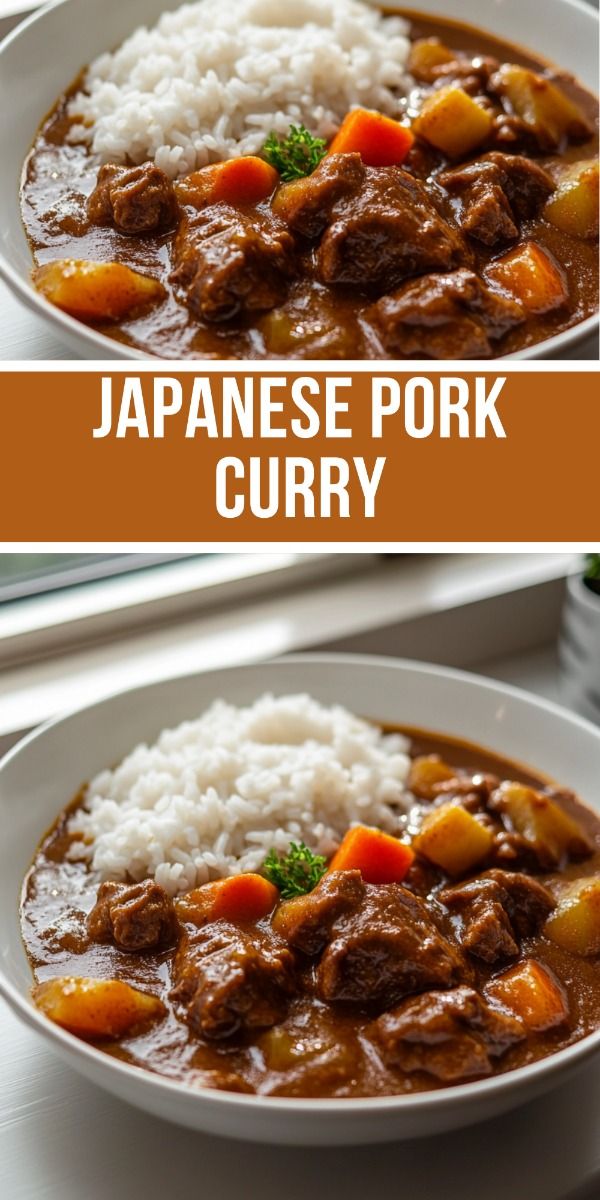
Japanese Curry With Pork
Japanese curry with pork turns tender pork and sweet root vegetables into a glossy, mildly spiced gravy that's pure comfort over steamed rice.
🧂 Ingredients
- 2 lb (900g) boneless pork shoulder, cut into 1-inch cubes
- 2 large yellow onions (about 1 lb / 450g), thinly sliced
- 3 medium carrots (about 10 oz / 280g), cut into 1-inch chunks
- 2 medium Yukon Gold potatoes (about 1 lb / 450g), peeled and cut into 1-inch chunks
- 3 tbsp unsalted butter
- 3 tbsp all-purpose flour
- 2 tbsp Japanese curry powder (or 1 block Japanese curry roux, about 3.5 oz / 100g)
- 3 cups (720ml) low-sodium chicken broth
- 1 tbsp honey plus 1 tbsp ketchup
- 1 tbsp soy sauce plus 1 tsp Worcestershire sauce
- 1 small Fuji apple, peeled and grated (about 1/2 cup)
- Steamed short-grain rice, for serving
📋 Instructions
- 1Sear the pork — Heat 1 tablespoon of oil in a large Dutch oven over medium-high heat (375°F / 190°C). Pat the pork cubes dry, season with salt and pepper, and sear in a single layer for 2-3 minutes per side until deeply golden brown on the outside; the pork will not be cooked through yet, which is fine. Work in two batches so the meat browns instead of steaming, then set the pork aside on a plate.
- 2Soften the onions — Lower the heat to medium (325°F / 165°C) and add the sliced onions to the same pot with a pinch of salt. Cook for 10-12 minutes, stirring often, until the onions are soft, translucent, and just starting to turn golden at the edges. This slow sweat is what gives Japanese curry its signature sweetness.
- 3Build the roux — Push the onions to one side, add the butter, and let it melt, then whisk in the flour and curry powder. Cook the paste for 60 seconds, stirring constantly, until it smells toasted and nutty and turns a shade darker, about the color of peanut butter. If you are using a curry roux block instead, skip this step and add the block later.
- 4Add liquid and pork — Pour in the chicken broth in a steady stream, whisking to loosen the roux from the bottom of the pot. Return the seared pork and any juices, then stir in the grated apple, soy sauce, and Worcestershire sauce. Bring to a gentle simmer at 195°F (90°C), cover, and cook for 15 minutes.
- 5Add the vegetables — Stir in the carrots and potatoes, re-cover, and simmer for 15-18 minutes more, until a knife slides into the potatoes with no resistance and the pork reaches 200°F (93°C) internally and shreds easily with a fork. Stir gently once or twice so nothing sticks to the bottom.
- 6Finish the sauce — If using a curry roux block, turn off the heat and stir it in now until fully dissolved. Stir in the honey and ketchup, then simmer uncovered for 3-5 minutes at 195°F (90°C) until the sauce coats the back of a spoon and the edges bubble lazily. Taste and adjust with salt, honey, or a splash of soy sauce.
- 7Rest and serve — Take the pot off the heat and let it rest for 5 minutes so the sauce thickens slightly. Spoon generous ladles over steamed short-grain rice and top with pickles if you like. Serve hot; the curry will keep thickening as it cools.